Telangana budget, per ₹1,000
Shrink the state’s budget to ₹1,000 of income: where that money comes from, where it goes, and how much more is spent than earned, which is borrowed. Ten years of budgets, 2017-18 to 2026-27, and the state’s debt since bifurcation in 2014.
Red: borrowed that year to cover the gap (fiscal deficit). RE = revised estimate, BE = budget estimate.
Approximate figures. Built from PRS budget analyses, CAG audit reports and reported budget allocations. Where a number isn’t published (some years’ salaries and pensions, legislators’ pay, welfare payouts) it is estimated or grouped, and marked. Read it for proportions, not exact accounts. Borrowing by state corporations outside the budget is not in these figures (see below).
Telangana 2024-25 Actual
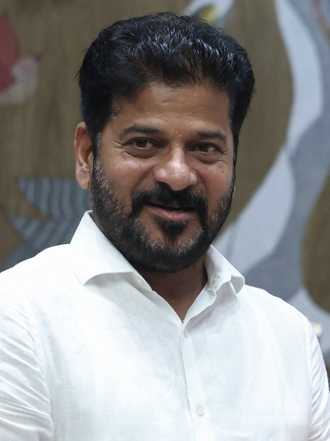 Chief MinisterA. Revanth Reddy
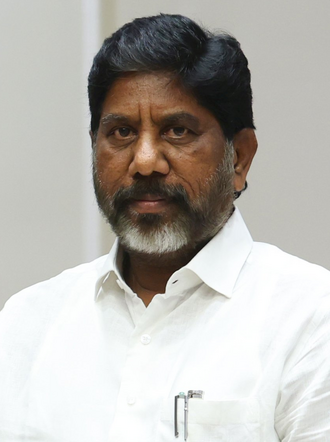 Finance Minister · presented the budgetMallu Bhatti Vikramarka
- For every ₹1,000 earned, the state spent ₹1,289.
- It borrowed ₹289 to cover the gap: ₹48,923 crore that year.
- Non-negotiable costs (interest, pensions, salaries) took ₹541.
- Interest on old loans alone: ₹164.
- Welfare schemes and poll promises: ₹186.
- Day-to-day spending (opex): ₹1,047. Building assets (capex): only ₹242.
Where ₹1,000 comes from
- State’s own taxesGST, VAT on fuel, liquor excise, stamps & registration, vehicle tax₹645
- Share of central taxesThe state’s cut of income tax, corporate tax and GST collected by the Centre₹160
- Grants from the CentreMoney for central schemes and Finance Commission grants₹47
- Own non-tax & otherMining royalties, fees, dividends, sale of assets, loan recoveries₹148
- Earned₹1,000
- Borrowed on topNew loans to cover the deficit+₹289
Where it goes
- Non-negotiable · interest, pensions, salaries₹91,585 crore₹541
- Interest on past loansPaid on the state’s accumulated debt₹164₹27,803 crore
- PensionsRetired government employees₹100₹16,950 crore
- Salaries: government employeesPRS, from the state budget: salaries of state government employees.₹276₹46,784 crore
- Salaries: politicians (MLAs, MLCs)Estimate: 159 MLAs and MLCs × about ₹2.5 lakh a month (salary and allowances) × 12. Ministers’ perks not included. May already be counted inside the salaries figure; at this size it makes no visible difference.₹0.3₹48 crore
- Negotiable · the government’s choices₹1.27 lakh crore₹748
- ₹186₹31,469 crore
Welfare schemes & poll promises5 named schemes · tap to see them
Crop loan waiver up to ₹2 lakh ₹106 ₹17,869 crore paid Aasara / Cheyutha pensions ₹44 ₹7,376 crore allocated Mahalakshmi (free bus for women) ₹18 ₹3,083 crore allocated Gruha Jyothi (200 units free power) ₹14 ₹2,418 crore allocated ₹500 LPG cylinder ₹4 ₹723 crore allocated Loan waiver: ₹17,869 crore transferred in three phases; the government says ₹20,617 crore in total. Rythu Bharosa was not paid until January 2025.
- Other expensesOpex · Running offices, other schemes and subsidies, grants to local bodies; also hides repayments of off-budget corporation loans, which the state pays as grants or subsidies to those corporations₹320₹54,170 crore
- Roads, dams, buildings & loansCapex · Roads, irrigation, buildings (capital outlay) and loans to state bodies, some of which go to repay corporation loans₹242₹41,028 crore
- Spent₹1,289
By department (head of account) · 2024-25
Per ₹1,000 earned. These are not a slice of “Other expenses”: each department’s money is spread across the pipe. Teachers’ and hospital staff pay sits in Salaries; schemes such as Thalliki Vandanam/Amma Vodi and Aarogyasri sit in Welfare; school and hospital buildings in Roads, dams, buildings; and the rest (running costs, grants to schools and hospitals) in Other expenses. So they are shown separately and not added to the pipe. A department-by-department split of salaries is published only in the CAG’s Finance Accounts (Volume II, Appendix I) and is not yet included here.
2024-25 totals: earned ₹1.69 lakh crore, spent ₹2.18 lakh crore, borrowed ₹48,923 crore. Source: PRS budget analysis · Legislators’ pay rate · Photo of A. Revanth Reddy: Prime Minister's Office, GODL-India · Photo of Mallu Bhatti Vikramarka: Prime Minister's Office, GODL-India
Where the state’s own tax money comes from
Since GST (July 2017) took over most sales taxes, the state keeps four big taxes of its own: VAT on petrol, diesel and liquor, liquor excise, stamps and registration on property, and vehicle tax. Its share of GST is shown first. ₹ crore a year:
State GSTVAT (petrol, diesel, liquor)Liquor exciseStamps & registrationVehicle taxElectricity dutyOther
“Other” covers smaller taxes (land revenue, entertainment, professions tax and others) so the parts add up to the total. Head-wise figures start in 2018-19, the first full year of GST; PRS does not publish them for earlier years. VAT now falls mainly on petrol, diesel, aviation fuel and liquor; the split between fuel and liquor is in the CAG’s Finance Accounts and is not shown yet. 2025-26 and 2026-27 are estimates; in recent years actual collections fell 16–29% short of what was budgeted. Source: PRS Legislative Research budget analyses.
Non-negotiable costs, every year
Interest, pensions and salaries have to be paid before any scheme or project. Per ₹1,000 the state earned:
InterestPensionsSalariesApproximate: years marked incomplete leave out salaries or pensions that were not reported separately, so the true share is higher.
Loans: what the state started with, and how they grew
Who borrowed it: debt added under each government
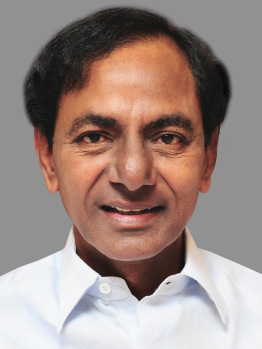
+₹3.31 lakh crore on the books from 2014-15 to 2023-24 (≈ ₹36,778 crore a year). Plus borrowing in 2014-15 itself, which sits inside the starting ₹72,658 crore with the share of united Andhra Pradesh’s debt.
₹1.21 lakh crore of corporation loans off the books by the end of 2023-24, up from ₹1.19 lakh crore in 2021-22 (the first audited figure).
+ ≈ ₹1.64 lakh crore estimated for 2024-25, 2025-26 and 2026-27, from each year’s fiscal deficit (audited where available, otherwise the budget figure).
Corporation loans off the books: no audited figure yet for these years.
Each year is credited to the party that ran the state for most of it: 2023-24 under BRS (Congress took office on 7 December 2023, for its last four months); TRS renamed itself BRS in October 2022. Figures are in rupees of each year, not adjusted for inflation or the size of the economy, so later years look larger partly because everything costs more.
Debt on the booksCorporation loans off the books (repaid by the state)Other guaranteed loans at risk (worst case)Estimate
Borrowing outside the budget
In simple terms: think of a family
The father takes a loan in his own name and pays the EMI. It shows on his bank statement.
= the state borrowing in its own nameThe father asks his son, who has no job, to take the loan, and the father pays the son’s EMI every month. The father’s statement looks lighter, but he is paying both.
= Kaleshwaram corporation borrows; the state pays the EMIThe daughter runs a shop and takes a business loan; the father signs as guarantor. She repays from sales, and may raise her prices to manage. If the shop fails, the bank comes to the father.
= a power company borrows; customers pay through bills; the state pays if it failsThree kinds of state debt
- Debt on the books
- Loans the state government takes in its own name (market loans, loans from the Centre, provident fund). Counted in the budget and in the deficit. Who pays: taxpayers, through the budget.
- Corporation loans off the books
- A state corporation borrows, but the state repays the loan from its budget every year, because the corporation has no income of its own to repay it. Kept out of the budget and the deficit, but the CAG counts it as state debt. Who pays: taxpayers, through the budget, but out of sight. Example: Kaleshwaram Irrigation Project Corporation, ₹64,652 crore (March 2023).
- Other guaranteed loans
- A corporation borrows and repays from its own income, and the state only promises to pay if it fails (a guarantee). Nothing reaches the budget unless the corporation defaults, so it is a risk, not a cost. Who pays: the people who use the corporation’s service, through higher bills or prices; taxpayers only if it fails. Example: Civil Supplies Corporation loans for buying paddy, repaid when the Food Corporation of India pays for the rice.
Worked example: the electricity board
- The government owns the power distribution companies (the “electricity board”).
- A power company borrows from banks, and the government guarantees the loan. Banks lend easily because the state stands behind it.
- The banks expect the power company to repay from what it earns: the electricity bills people pay.
- So the loan is repaid by consumers. When the power company’s costs rise, the regulator approves higher tariffs or fuel surcharges, and the cost is passed on in everyone’s power bill.
- If tariffs cannot cover it, the state steps in: it pays subsidies to the power company or takes over its debt, and then it lands in the budget, paid by taxpayers.
The same pattern applies to other corporations: rice-procurement loans are repaid when the Food Corporation of India pays for the rice, and housing or road corporation loans are repaid from rents, tolls or, when those fall short, the state budget. Either way, the people end up paying, through prices, bills or taxes; the guarantee only decides which and when.
When does a guaranteed loan cost the budget?
| Situation | Where it shows up | On this page |
|---|---|---|
| The corporation cannot repay, so the state pays the loan every year | Grants or loans to the corporation. Telangana lent ₹17,829 crore in 2022-23 to service these loans. | Counted: “corporation loans off the books” |
| The state keeps a loss-making corporation running | Subsidies, such as power subsidy or rice subsidy | Counted: inside welfare and other expenses |
| A corporation defaults and the bank calls in the guarantee | A one-time payment from the budget | Only as the “at risk” worst case, until it happens |
| Guarantee fee the corporation owes the state | Small income for the state | Not shown. Telangana collected ₹3 crore of ₹2,960 crore due in 2023-24. |
Why it matters
Borrowing through corporations lets a government spend now without the loan counting against its legal borrowing limit or showing in the deficit. When the corporations struggle, the debt comes back to the state’s books. The CAG found Telangana did not disclose a ₹50,000 crore guarantee to its Civil Supplies Corporation, under-reported power company guarantees by ₹16,000 crore, and classed guarantees that should be full state liabilities as “low risk”. CAG audit report, CAG Accounts at a Glance 2023-24
Under the BRS government, special-purpose corporations (Kaleshwaram, Mission Bhagiratha and others) borrowed outside the budget; ₹1.21 lakh crore of these loans were being repaid by the government in March 2024 (CAG). Loans the state has guaranteed for its corporations, which it may have to repay:
2014-15: state White Paper (Dec 2023), from RBI. 2015-16 onward: CAG total liabilities (public debt plus public account liabilities), from the CAG State Finances Audit Reports and Accounts at a Glance. Light amber segments are loans the state has guaranteed for its corporations (outstanding at that March), minus corporation loans already shown, which it would have to repay if the corporations default: a worst case, not counted in the totals owed; for Telangana the CAG states the ₹1.21 lakh crore of corporation loans are part of the ₹2.21 lakh crore guaranteed. Orange hatched segments are corporation loans kept off the budget but repaid by the state, shown where an audited figure exists (2023-24: Loans raised by corporations and repaid by the government, 31 March 2024 (CAG); 2021-22: CAG: off-budget borrowings the state is liable to repay, March 2022; 2022-23: CAG: off-budget borrowings assessed, March 2023 (Kaleshwaram ₹64,652 crore); later years carry the last audited figure forward as an estimate); earlier years also had such loans, but no year-by-year figure is published. Red hatched bars are estimates: PRS’s outstanding-liabilities share of GSDP applied to the state’s GSDP. By 2026-27 the debt is projected at about ₹5.67 lakh crore. Sources: Telangana White Paper on State Finances, CAG Accounts at a Glance 2023-24, PRS.
Income grew. How much did spending grow with it?
Above ₹100 means spending grew faster than income that year, so the extra was borrowed. Hatched bars are falls. Years marked RE or BE are estimates, not audited accounts.
How these numbers work. Income is what the state earns without borrowing: its own taxes and fees, its share of central taxes, grants from the Centre, and small capital receipts such as loan recoveries. Spending is day-to-day (revenue) expenditure plus capital outlay and loans given to state bodies. Repayment of old loans is left out, because it is paid with fresh loans; the gap between spending and income is the fiscal deficit, which is borrowed. Years up to 2024-25 are audited actuals; 2025-26 is the revised estimate and 2026-27 is the budget estimate. Telangana’s estimates for interest and pensions are well below what it actually paid in 2024-25, so the latest two years likely understate both. Welfare schemes and poll promises are not a budget category: each scheme sits inside a department head, so we add up the named cash and free-benefit schemes year by year (open the list under the chart). Each figure is tagged allocated (that year’s budget allocation), paid (reported as actually disbursed) or stated (the government’s own figure); allocations can run well ahead of what is paid. Social pensions here are separate from pensions for retired government staff. Repayments of off-budget corporation loans are not in the interest line: the state pays them as grants, subsidies or loans to the corporations, so they sit inside other expenses and capex, and the non-negotiable share is understated by that amount. Source: PRS Legislative Research state budget analyses, compiled from Telangana budget documents and CAG accounts.